French Air Force flying school
Promise at DawnThe French Air Force flying school was the gateway from Romain Gary’s civilian studies to military aviation. His route into it ran through twice-weekly preparatory sessions, a difficult wait for orders, and a late arrival at Avord airbase; there he made up lost ground and trained in aircraft whose primitive equipment and methods revealed the gap between the air force’s instruction and the war approaching.
Preparation and Admission
In his final year at law school, Gary was completing preparatory military training that would qualify him to enter the Air Force Academy (Salon-de-Provence). The sessions met twice a week at La Vache Noire in Montrouge. He had obtained his law degree with difficulty, but secured a place in the Academy’s top listing, an achievement that brought the prospect of a second-lieutenant’s gold stripe within reach.
Admission did not lead directly to flight instruction. Although he held both his law degree and his certificate of advanced military preparation, Gary was kept at Salon-de-Provence for nearly six weeks because the officers and noncommissioned officers there had received no instructions about him. His repeated inquiries through official channels produced no result until Lieutenant Barbier took an interest in the case and supported his protests. Gary was then ordered to Avord airbase, arriving a full month late and having missed almost a third of the course.
Training at Avord
Gary responded to the delay by concentrating on the work rather than treating his late arrival as a reason to give up. He struggled with compass theory but managed to make up for lost time. His marks were generally average; flying and infantry leadership were the exceptions. In those areas he discovered an authority in speech and gesture that recalled his mother’s manner, linking his performance as a cadet to the forceful example he had grown up observing.
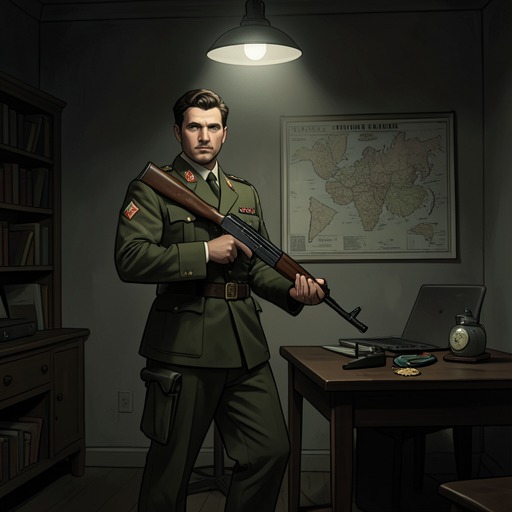
The instruction depended on aircraft and equipment that made room for individual initiative. Gary recalled open cockpits, rudimentary instruments, and long hours on the airfield in heavy, one-piece leather flying suits. Cadets flew the slow Potez-25, while training also involved giving hand signals to the pilot of a Leo-20 biplane. The flying offered him a strong sense of freedom and personal skill, but the methods had a darker implication: in retrospect, he saw the training as preparation for the kind of war fought in 1914, not the modern air conflict already taking shape.
Cadet Life and Graduation
As graduation approached, the cadets awaited the announcement of their final standing and the chance to choose their postings. Gary’s uniform had been made by the military tailor, with its cost covered by five hundred francs his mother sent; she had borrowed the money from M. Pantaleoni, an old friend from the Buffa Market. Even the choice of cap visor became a small exercise in presentation: the long visor looked more rakish, while the short one suited him better. He also managed to grow the small moustache then considered fashionable among fliers. The gold wings on his chest and the carefully chosen uniform offered a public military appearance behind which, he reflected, the little boy could hope to pass unnoticed.
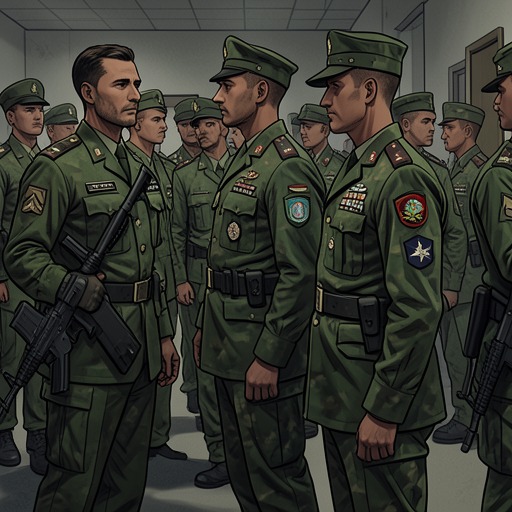
At the graduation parade, the available stations were listed on a blackboard, including Paris, Marrakech, Meknès, Maison-Blanche, and Biskra. Cadets made their choices according to their marks; those with the highest standing traditionally chose Morocco. The ceremony therefore made the school’s progression concrete: preparation and instruction led to a rank and a choice of destination, with performance determining the next posting.
Significance in Gary’s Military Career
The flying school marks the point at which Gary’s ambition to serve as an aviator became practical training. His experience there combined personal accomplishment with institutional obstruction: he earned admission in the top listing, was delayed by a breakdown in orders, and reached Avord airbase too late for a substantial part of the course. His determination to catch up, followed by stronger results in flying and leadership, turned that setback into a passage toward service rather than an end to it.
The school’s legacy in his account is also measured against what its training could not prepare him for. The open cockpits, primitive instruments, and slow aircraft were sources of fascination, yet they exposed the antiquated assumptions behind the instruction. Graduation and assignment led Gary toward wartime aviation, but the contrast between the cadets’ aircraft and the conflict that followed made the school an emblem of both his entry into military life and France’s inadequate preparation for modern war.